ECM: Pushing Jazz's Creative Boundaries
How ECM Records cultivated a spacious chamber-jazz sound, distinctive visual identity, and global catalog that pushed jazz into new creative territory.
Originally published on RealBookSoftware.com
The Sound of Silence and Space
A single piano note rings out, resonating in the silence. Its tone fades slowly, leaving only stillness. Another note sounds, this one lower and more sonorous. Again it reverberates, hanging in the air. The listener waits, breath held in anticipation, as the pianist allows the silence between each melodic phrase to speak as eloquently as the music itself.
This meditative approach exemplifies the minimalist jazz aesthetic pioneered by the Munich-based label ECM Records. Since its founding by producer Manfred Eicher in 1969, ECM has cultivated an intimate "chamber jazz" sound that puts space, texture and subtlety above all else. Their roster of artists use silence, nuance and sparse arrangements to create music of profound contemplation.
Notes are chosen with care. Phrases are imbued with emotion. Repetition and variation reveal deeper meaning. On an ECM album, you won't hear flashy solos or catchy hooks. Instead, you'll discover jazz at its most introspective and sublime. Join us as we explore the unique, minimalist world of ECM.
Birth of ECM Jazz: Manfred Eicher's Vision
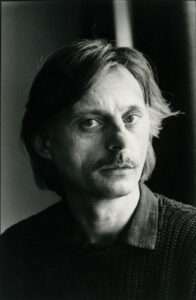
In 1969, nestled in the heart of Munich, ECM (Edition of Contemporary Music) emerged under the visionary guidance of German record producer Manfred Eicher. This independent label, carved out of Eicher's profound passion and discerning musical ear, swiftly distinguished itself from the commercial mainstream. Dedicated to the art of jazz, ECM, under Eicher's astute curation, became a bastion for what came to be known as "chamber jazz" – a genre that revels in subtlety, embraces the eloquence of space, and cherishes the texture of sound.
Eicher's journey, which began in Lindau and was honed at Berlin's Academy of Music, was marked by an unquenchable thirst for sonic exploration. His vision transcended mere musical production; it was about crafting an intimate, evocative experience where the resonance of each note was as significant as the note itself. In this realm, the lush, minimalist soundscapes of ECM were born. Here, the arrangements are intentionally sparse, allowing the music to breathe in a cathedral-like openness, inviting listeners to a world of reflection and deep listening.
The essence of ECM's identity lies in its embrace of minimalism. The label's roster, including the likes of Jan Garbarek, Keith Jarrett, and Arvo Pärt, personifies this ethos. Garbarek's saxophone weaves soft, meditative laments, drawing from Nordic folk influences, while Jarrett's piano improvisations offer a flow of intricate subtlety. Pärt's contributions, especially in works like "Tabula Rasa," encapsulate "holy minimalism," where melodies are interlaced with profound silences.
ECM, under Eicher's pioneering vision, evolved into a sanctuary for musicians to express themselves beyond the constraints of commercialism. This sanctuary became a crucible of creativity, pushing the boundaries of jazz and inviting listeners to delve deep, find meaning in each hushed note, and experience the profound power of unhurried, sparse music.
Album Artwork: ECM's Distinctive Visual Identity
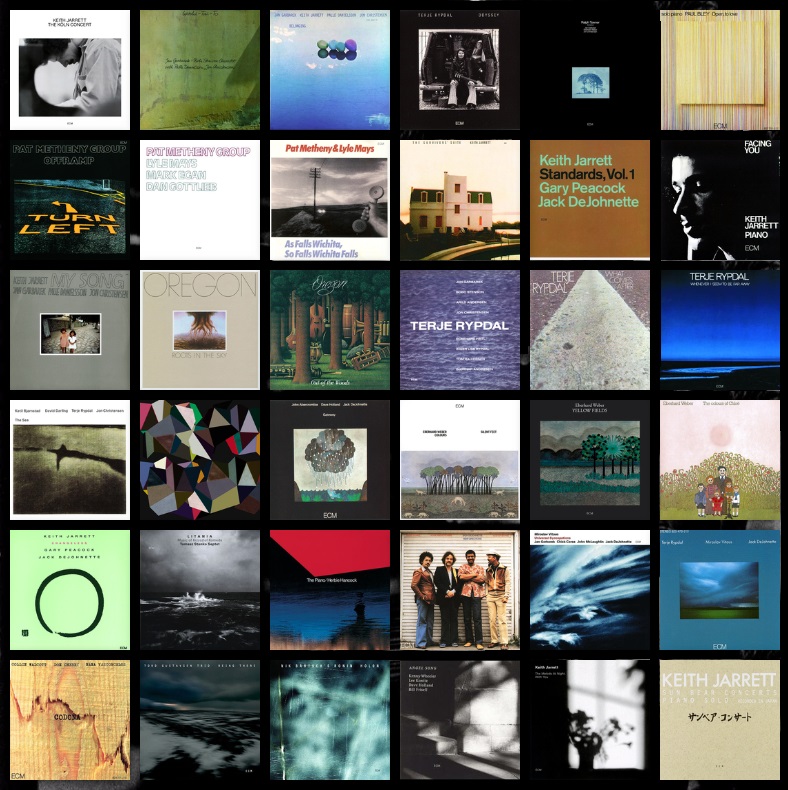
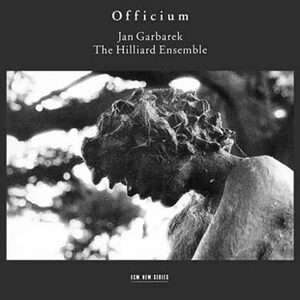
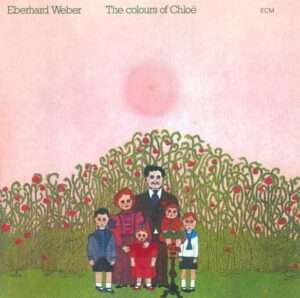
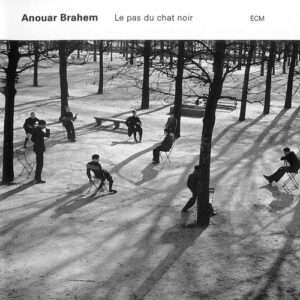
ECM Records has long been celebrated for its album artwork. From the moment you lay eyes on an ECM album cover, you know you're in for a unique auditory and visual experience. The label's distinctive visual identity is a testament to its commitment to artistic excellence.
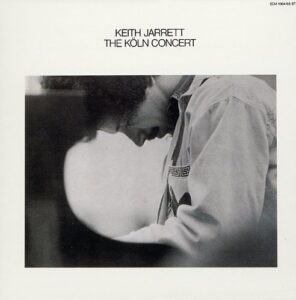
Take, for instance, the iconic cover of Keith Jarrett's "The Köln Concert" (1975). The minimalistic design encapsulates the contemplative and introspective nature of the music within. It's a visual invitation to immerse yourself in the sonic journey.
Similarly, Jan Garbarek's "Officium" (1994) album cover, with its ethereal and otherworldly imagery, reflects the spiritual and transcendent qualities of the music. ECM's album artwork doesn't just complement the music; it becomes an inseparable part of the listening experience.
What sets ECM apart is its belief that album artwork isn't just an afterthought; it's a crucial component of the artistic expression. This commitment to visual storytelling is evident in every ECM release.
The label's visual aesthetics often feature minimalist designs with ample white space, mirroring the musical approach. The album covers themselves become a canvas of silence.
The label collaborates with visionary artists and photographers who understand the essence of the music. The result? Album covers that are as evocative as the notes themselves.
Whether it's the moody landscapes of Eberhard Weber's "The Colours of Chloë" (1973) or the enigmatic imagery of Anouar Brahem's "Le Pas du Chat Noir" (2002), each cover is a work of art in its own right.
ECM's dedication to the visual aspect extends to its packaging, with high-quality materials and meticulous attention to detail. When you hold an ECM album in your hands, you're not just holding music; you're holding a piece of art.
Musical Elements Emphasized in ECM's Minimalism
In the ethereal world of ECM Jazz, the essence of minimalism is not merely an aesthetic choice but a profound artistic philosophy, meticulously curated by Manfred Eicher. ECM's signature sound, both spacious and intimate, invites listeners into an immersive musical experience akin to being present in the studio. This distinct sound, evolving over time, maintains its unique character, shifting from early works imbued with ethereal landscapes to later explorations in avant-garde and contemporary classical. The label's productions, favoring subtlety over showmanship, spotlight the nuances of melodic phrasing and tone, often foregoing technical complexity for the profound power of simplicity.
ECM productions spotlight subtlety over showmanship. Melodic phrasing and tone take precedence over technical skill. Improvisations unfold unhurriedly, with ample space between notes. Compositions repeat with slight, meaningful variations.
Tempos tend towards the adagio, or slowly paced. There are no briskly swinging standards or rapid-fire solos. Instead, the leisurely tempo pulls the listener inward. We savor each note as it hangs in the air.
ECM's approach to composition and arrangement is marked by an intentional economy of sound – a lone piano chord can strike with the force of thunder, and the lingering sax tones evoke a sense of yearning. This restraint in instrumentation, favoring a lone piano or saxophone accompanied by delicate strings or synthesizers, results in music that is not just heard but deeply felt.
The spaciousness of the sound, enhanced by stereo imaging and reverb, creates an expansive acoustic environment, akin to the resonant interior of a cathedral. In this serene auditory space, each note hangs in the air, inviting contemplation and close listening, while the deliberate pacing of adagio tempos draws the listener inward, encouraging a meditative engagement with the music.
Arranging is economical – the instrumentation is often a lone piano or saxophone with delicate strings or synths providing occasional texture. Rather than dense harmonies, chords are spread out between instruments. Restraint focuses attention on the interplay of harmony and silence.
Every element serves the minimalist goal of maximum impact from minimal resources. A single piano chord strikes like a clap of thunder before fading into the distance. Sax tones linger, as if reluctant to decay. By keeping the palette limited, ECM artists make the most of each color.
ECM's Signature Sound: Production and Recording Approaches


Embarking on a journey through the soundscapes of ECM Jazz is akin to entering a world where music transcends the ordinary, offering an immersive auditory experience that is both ethereal and atmospheric. This unique soundscape, meticulously crafted by producer Manfred Eicher, is a testament to the label's commitment to capturing music's natural resonance, creating an environment where each note and silence resonates deeply with the soul.
At the heart of ECM's distinctive sound is its production and recording approach, where sessions unfold in acoustically rich spaces like churches, cathedrals, and concert halls. These venues, chosen for their intrinsic reverb, become as instrumental to the recordings as the musicians themselves. The strategic placement of high-end analog microphones captures the fullness and decay of each note, ensuring that the recordings are pure and unfiltered, directly transferred to tape.
This purist approach results in a signature ECM sound that is honest and intimate, as if the musicians are performing live in the listener's living room. The notes in ECM recordings fully resound before they decay, allowing the silence between phrases to emerge, highlighting subtleties often lost in conventional studio editing. The result is a profoundly lifelike listening experience, a masterclass in ambient recording that forms an audio documentary of minimalist jazz in its most natural state.
Soundscapes of ECM Jazz: Ethereal, Atmospheric, and Reflective
- Eberhard Weber's "The Colours of Chloë" (1974): Weber's use of the electric double bass creates a mesmerizing atmosphere, blending seamlessly with the delicate piano and saxophone. It's a sonic painting of emotions.
- Ralph Towner's "Solstice" (1975): Towner's acoustic guitar mastery combined with the melodic interplay of piano, saxophone, and percussion creates a musical journey through landscapes of the mind.
- Terje Rypdal's "Waves" (1978): Rypdal's electric guitar work, often drenched in reverb and echo, conjures up sonic waves that wash over the listener, evoking deep introspection.
- Arvo Pärt's "Tabula Rasa" (1984): Pärt's minimalist compositions, featuring violin and prepared piano, evoke a sense of calm and contemplation.
- Anja Lechner and Vassilis Tsabropoulos' "Melos" (2008): The cello and piano come together in this album to create atmospheric compositions that are both introspective and expansive.
The ECM Catalog: Diverse Styles within the Genre
One of ECM Jazz's unique qualities is its ability to encompass a vast array of styles under its umbrella. Avant-garde explorations like those of Evan Parker underscore that the catalog is a kaleidoscope of sonic diversity.
The label's commitment to artists' creative freedom allows for the development of distinct styles. Whether it's the atmospheric landscapes of Eberhard Weber or the Nordic mysticism of Anouar Brahem, each artist brings their own voice to the ECM canvas.
Composers like Arvo Pärt and Heinz Holliger bring ECM's ambient style to neoclassical works. Folk singer Savina Yannatou and Jan Garbarek infuse traditional songs into improvisations. Brazilian artists like Egberto Gismonti synthesize jazz with Afro-Brazilian rhythms.
These seamless integrations forge new frontiers in jazz. ECM recordings are hybrid soundscapes with a cinematic expansiveness. Their global influences align with the label's borderless ideals.
ECM's Global Reach
From its Munich base, ECM has etched a global imprint with its unique brand of minimalist jazz, transcending its modest origins to span over 20 countries across continents from Europe to Asia, the Americas, and Africa. The label's expansive roster boasts artists from diverse nations like Norway, Sweden, Iceland, Brazil, and beyond, each bringing their cultural heritage to the table.
Manfred Eicher has always sought a universal language in jazz, one that transcends nationalistic styles and embraces sonic purity. This pursuit has led to a catalogue that spans over 1500 albums in multiple languages, reflecting Eicher's belief in music's ability to transcend complexity and touch the core of human emotion.
Here is a list of some artists that depict the global extent of the ECM roster: Dino Saluzzi, Tigran Hamasyan, Egberto Gismonti, Miroslav Vitous, Dave Holland, John Surman, Arvo Pärt, Vladislav Delay, Louis Sclavis, Anja Lechner, Eberhard Weber, Markus Stockhausen, Enrico Rava, Giovanni Guidi, Stefano Bollani, Masabumi Kikuchi, Rabih Abou-Khalil, Espen Eriksen Trio, Jan Garbarek, Mathias Eick, Nils Petter Molvaer, Terje Rypdal, Trygve Seim, Tomasz Stanko, Anders Jormin, Bobo Stenson, Nik Bärtsch, Anouar Brahem, and many others.
Beyond Jazz: ECM's Exploration into Avant-Garde and Contemporary Classical
The label has been a trailblazer in exploring avant-garde and contemporary classical music, bridging the gap between genres in a way that's truly remarkable. It gave a prominent platform to composers like Arvo Pärt and to the avant-garde explorations of Evan Parker, making the catalog a kaleidoscope of sonic diversity echoing the voice of minimalism across the globe.
Take the case of Eleni Karaindrou, whose compositions for ECM blend elements of jazz, classical, and world music. Her music, as heard in albums like "Elegy of the Uprooting" (2005), paints vivid landscapes of emotions, transcending genre labels.
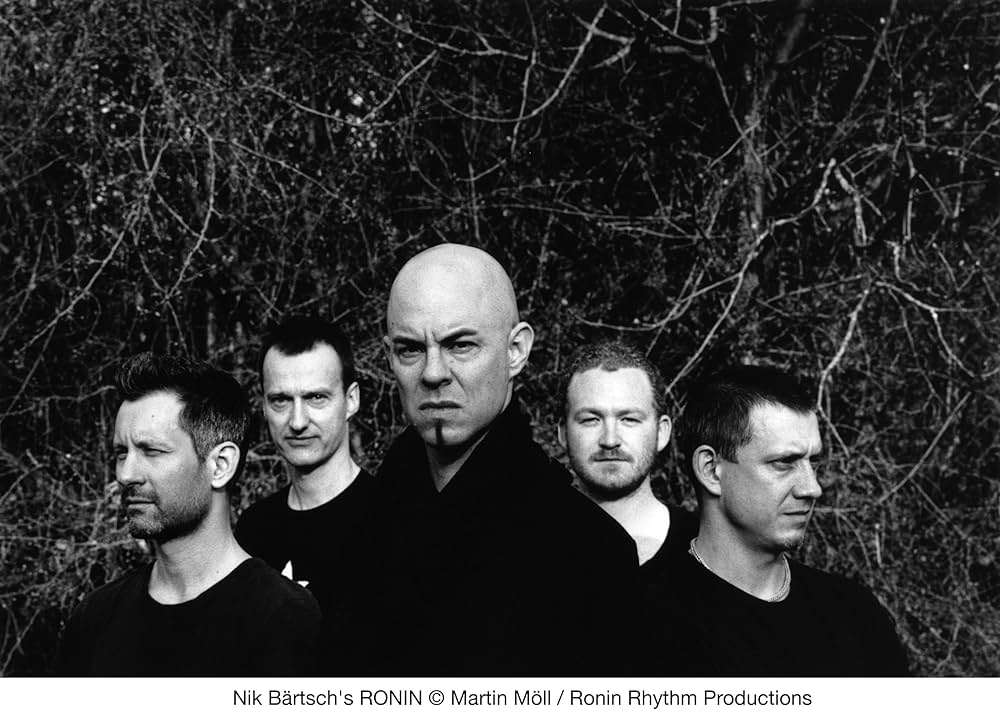
Another visionary artist is Nik Bärtsch, whose ensemble Ronin delves into the realms of minimalist jazz. Their album "Stoa" (2006) is a masterclass in rhythmic precision and sonic experimentation.
Interesting Albums And Must-Hear Classics from ECM
- Keith Jarrett – "The Köln Concert" (1975): This legendary live recording is a masterpiece of improvisation and remains one of the best-selling solo piano albums in history.
- Jan Garbarek – "Officium" (1994): A groundbreaking collaboration between Garbarek's saxophone and the ethereal voices of the Hilliard Ensemble.
- Pat Metheny – "Bright Size Life" (1976): Metheny's debut as a bandleader introduced his distinctive guitar sound to the world.
- Keith Jarrett's "Spheres" (1977): Jarrett's exploration of the pipe organ creates a mesmerizing blend of classical and jazz influences.
- Eberhard Weber's "The Following Morning" (1976): Weber's use of electric double bass and synthesizers flirts with ambient and electronic music.
- Ralph Towner's "Solstice" (1975): Towner's acoustic guitar mastery creates a musical journey through landscapes of the mind.
- Terje Rypdal's "Waves" (1978): Rypdal's electric guitar work conjures sonic waves that evoke deep introspection.
A Few ECM Albums With Songs Appearing In Real Book Software Volume 1
- Pat Metheny – Bright Size Life (1976): Sirabhorn, Bright Size Life, Missouri Uncompromised, Unity Village, Midwestern Nights Dream.
- Dave Holland – Conference of the Birds (1973): Conference of the Birds.
- Chick Corea – Return to Forever (1972): Crystal Silence, Sometime Ago – La Fiesta.
- Chick Corea – Crystal Silence (1972): Señor Mouse, Arise, Her Eyes, I'm Your Pal, Desert Air, Crystal Silence, Falling Grace, Feelings and Things.
- Eberhard Weber – The Colours of Chloë (1974): The Colours of Chloë.
- Gary Burton – New Quartet (1973): Open Your Eyes, You Can Fly, Coral, Brownout, Olhos de gato, Mallet Man, Nonsequence.
- Keith Jarrett – Facing You (1972): Semblence.
- Ralph Towner & Gary Burton – Matchbook (1974): Some Other Time.
Long-time ECM Artists
While continuously seeking new talents, ECM has thrived through the artistry of core roster members. Guitarist Ralph Towner shaped the label's early years with his textural improvisations. John Abercrombie expanded jazz guitar vocabulary across 14 ECM albums.
Trumpeter Enrico Rava lent his warm, melodic playing to over 20 releases. Brazilian composer Egberto Gismonti fused jazz and South American styles on a string of 1970s albums. The brilliant fretless bass of Eberhard Weber pulsed at the heart of seminal ECM fusion works.
As years passed, new pillars emerged. Polish trumpeter Tomasz Stanko sculpted stark, haunting atmospheres. Pianist Marilyn Crispell channeled classical and free jazz influences into exquisite compositions.
These artists and many more defined the ECM experience across five decades. Their continuous output accumulates into a singular sound where space and resonance form the heart of creativity. Through its pillars, ECM sustains a future-looking legacy.
Criticism and Praise for the ECM Aesthetic
Like any pioneering force in the music industry, ECM Records has not been immune to criticism. Some purists argue that the label's commitment to a distinct sound has led to a homogenization of jazz, blurring the lines between genres. They suggest that the label's pursuit of atmospheric and ethereal qualities may have sacrificed the raw and spontaneous essence of jazz.
ECM's sparse, contemplative sound is not for everyone. Some listeners and critics have described ECM jazz as too austere or academic. The subtlety of the playing, along with the absence of showy solos and driving beats, is interpreted by some as too highbrow – music for analyzing rather than enjoying.
Conversely, many praise ECM's focus on nuance over flash. The label has been commended for fostering intimacy and spirituality in their recordings, for preserving the resonant acoustics of classic performance spaces, and for supporting artists whose innovations challenge jazz orthodoxy.
Critics and fans alike commend the label for its unwavering dedication to artistic integrity. ECM's ability to foster an environment where musicians can explore uncharted territories and create deeply immersive music is a testament to its unique place in jazz discourse.
Master This Style
Deepen your practice with the professional tools used by jazz masters.
Related Reading in Jazz History
Bebop: Jazz’s Game-Changer
The 1940s revolution that turned jazz from popular dance music into a high-art form.
Jazz Abroad: A Global Art Form
A directory of jazz musicians from outside the United States. Browse by region, country, and instrument as individual bios are migrated into the new site.
Swing Time Glory: The Beat That Defined a Generation
When jazz was the most popular music in America. A look at the big band explosion.